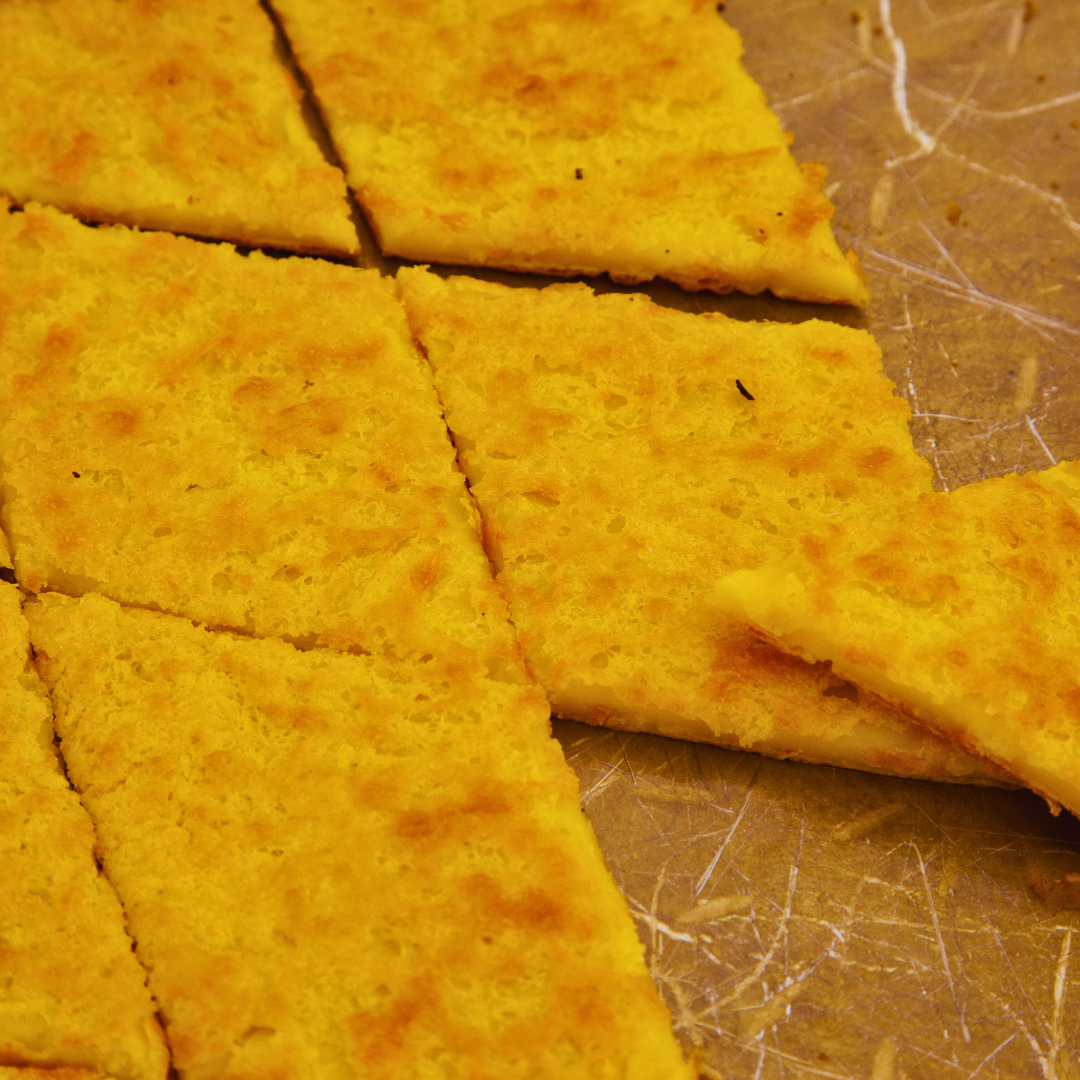
Farinata has very ancient roots: various Latin and Greek recipes mention baked dishes made from pureed legumes. Chickpeas were well known in the Arab world as well. It is widely believed that the trade of the Maritime Republics of Pisa and Genoa imported the habit of using this legume into Italy during the Middle Ages, which then transformed into what we know today as farinata.
The oldest written record of farinata is a decree from the Republic of Genoa dating back to 1447, which prohibited the use of low-quality oil. According to a widespread belief, the birth of farinata dates back to when Genoese galleys, laden with prisoner rowers, were caught in a storm after defeating Pisa in the Battle of Meloria in 1284. In the commotion, some barrels of oil and sacks of chickpeas would have spilled, soaking in saltwater. Since most of the supplies were lost, it is said that the sailors were offered a puree of chickpeas and oil. Some sailors refused the mush, leaving it in the sun, which dried and turned into a kind of pancake that, when tasted the next day by the sailors, was deemed a delicacy. Later, the Genoese improved the puree by baking it and, to mock the defeated, called it “gold of Pisa.”
Today, it is a typical dish in some Mediterranean areas, especially in Ligurian and coastal Tuscan cuisine, with many variations. However, the classic recipe uses just a few genuine ingredients: chickpea flour, salt, olive oil, and water. This is due to its characteristic as a poor food, used as an alternative to bread, providing sustenance thanks to the vitamins B and C and phosphorus contained in chickpeas and flour.
Typically, a wood-fired oven and special copper pans or trays are used for preparation, where it is fried at high temperature. Staying at Downtown Blue Apartment, you can enjoy farinata in one of the many historic venues in the city, one of the most representative and beloved dishes of Liguria.