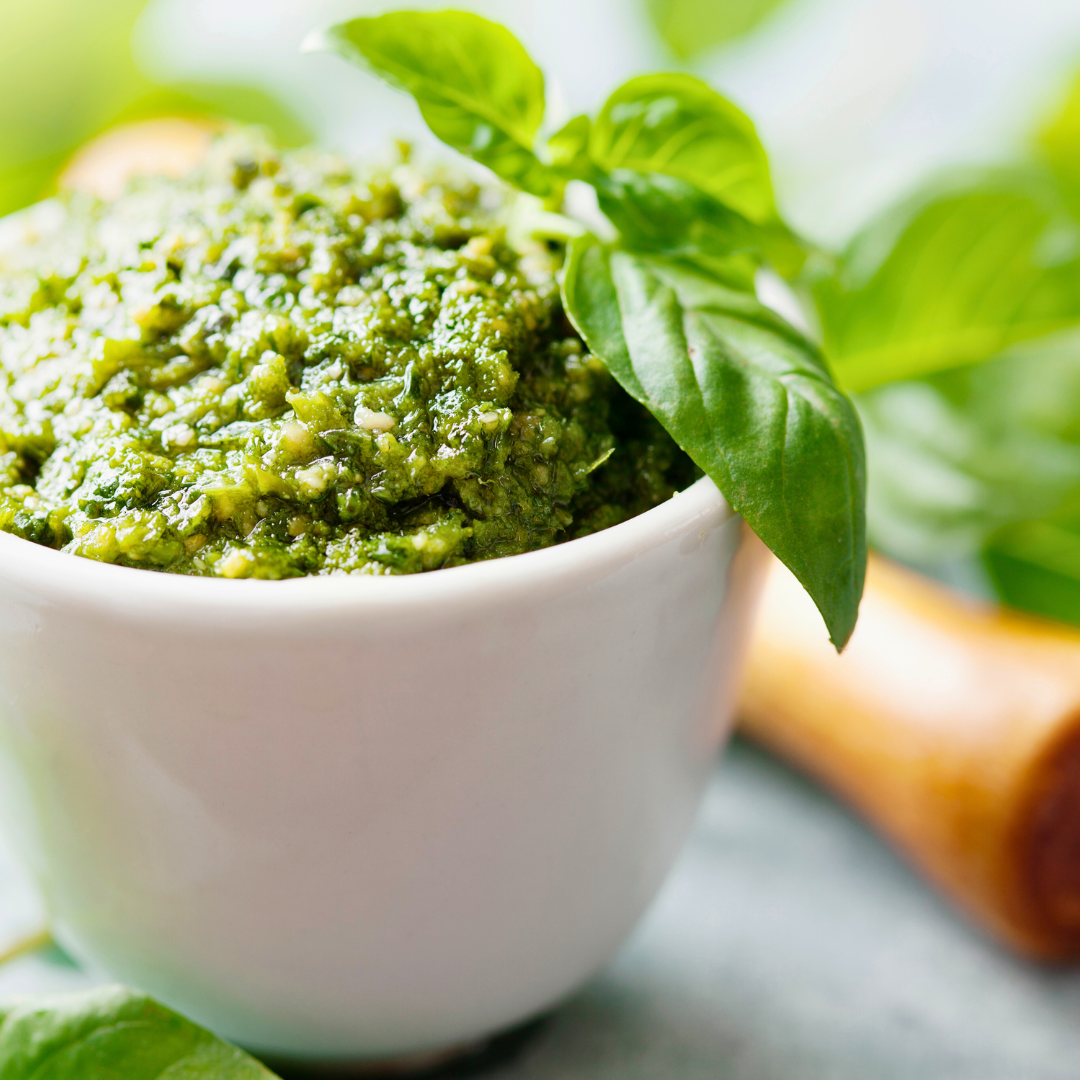
The origins of pesto have their roots in a very distant past. In ancient Rome, the mortar—just like the one still used today to prepare pesto—was utilized in the kitchens of the empire, and among the most popular recipes was a sauce made with garlic, aromatic herbs, cheese, salt, and oil. Essentially, it was a “garlic-heavy” version of our pounded sauce, which we find in a similar recipe during the Middle Ages. This medieval version is recognized by historians and experts of Genoese history as the first true ancestor of pesto: the Aggiada, a sauce widespread in Liguria made with garlic, oil, vinegar, and salt, used both for seasoning and preserving food.
Over the centuries, this “garlic sauce” continued its evolution toward its definitive transformation into Pesto alla Genovese. The recipe gradually evolved with small adjustments here and there until reaching the present day with the well-known ingredients as specified by the regulations of the Consorzio del Pesto Genovese: Genovese basil, Riviera Ligure extra virgin olive oil, Fiore Sardo pecorino and Grana Padano cheeses, garlic, Italian pine nuts, and coarse salt.
However, the story of Genovese pesto is still “work in progress,” given the enormous success this sauce continues to gain worldwide, thanks also to the many Ligurian emigrants who carry a piece of their Ligurian cuisine in their hearts. Indeed, pesto has been included in the list of recognized Italian PAT (Traditional Agri-Food Products), established by the Ministry of Agricultural Policies, which also has the task of promoting awareness both nationally and internationally.
Genovese Pesto is a culinary delight and a jewel in the crown of Ligurian tradition: the intense color of fresh basil, its bold flavor balanced by the richness of the cheeses and the sweetness of the basil, is capable of offering an unforgettable culinary experience.
Staying at Downtown Blue Apartment, you’ll have the opportunity to taste this delicious sauce in the numerous restaurants throughout the city, as well as along the streets of the historic center, in small establishments offering “Slow Food” products.