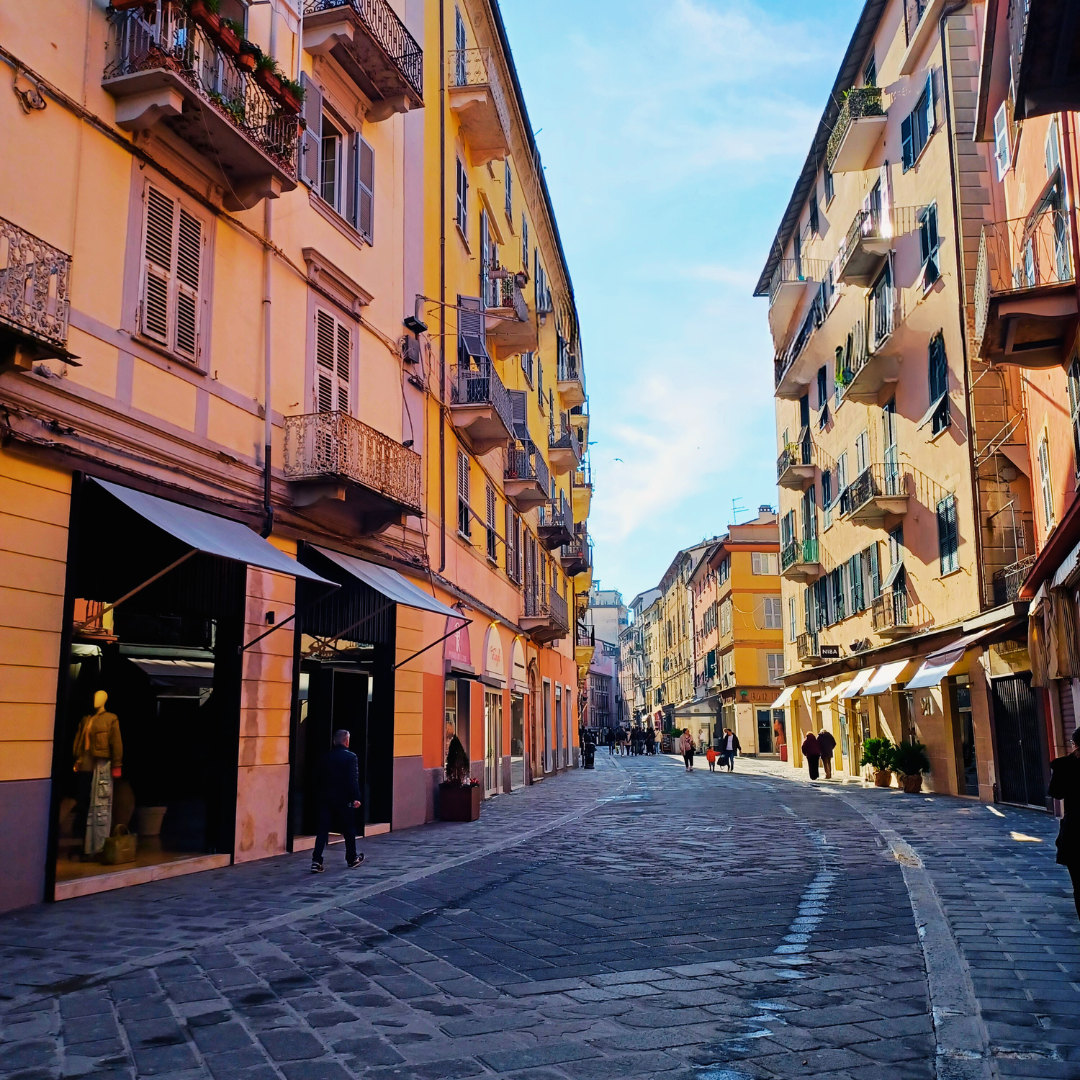
The most characteristic street of the old historical center is undoubtedly Via del Prione, which has always been a gathering place for meeting occasions and commercial activities. It is believed that the name derives from the word “pria,” which in the Genoese dialect means “stone, large boulder.
In ancient times, this stone stood at the intersection with the current Via Sforza and served as a “pulpit” for the municipal crier to explain to the people the decisions taken by the local government authority. In short, it functioned as a sort of public notice board, but the large stone was also a gathering place for the ancient inhabitants of the city. In fact, that very spot was also used to publicly display those who had some unresolved issues with justice, like an unpaid debt.
Once, even before the construction of the Arsenal, Via del Prione constituted the true axis around which all city life revolved, in every aspect: from legitimate business to illicit traffic, from transgressive passions to romantic loves, from the devotion of the faithful to the cult of gambling. Its centrality was not represented only by the houses that the patricians erected along its course or in the immediate vicinity, but by the fact that all activities of some interest took place right there in that street segment that still represents the old Spezia today.
The “Carugo drito,” so called not because it is straight, far from it, but because “drito” in this case means “main,” since it was the street that allowed crossing the city to exit through the city walls at Porta Genova. In 1853, Richard Wagner stayed in an inn on Via del Prione, identified some years ago, in the ancient Doria palace. It was on that occasion that the composer was inspired for the prelude of the “Rheingold.”
As in the past, Via del Prione still represents the vibrant life of the city today, easily reachable on foot, staying at Downtown Blue Apartment.